

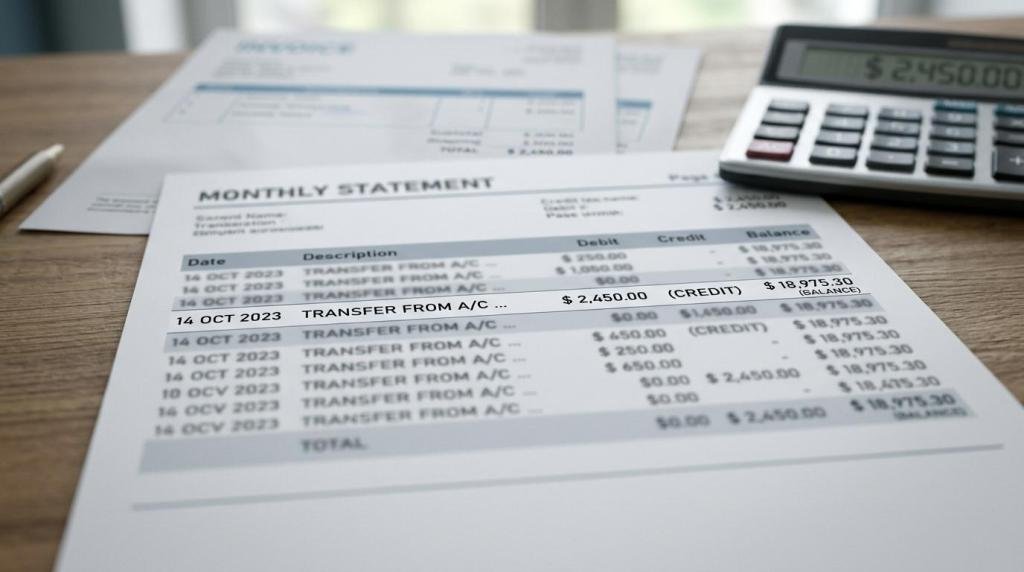
A finance application is not only a request for money. It is a request for confidence.
Lenders and investors want to see how a business earns, spends, collects, pays, and plans. If the bookkeeping is current, that picture is far clearer. If it is late, inconsistent, or incomplete, even a healthy business can look risky.
Bookkeeping often sits in the background until funding becomes urgent. That is usually the point when its value becomes obvious. Clean records support the numbers in your application, back up your forecasts, and help answer difficult questions before they become objections.
Bookkeeping evidence lenders review in finance applications
When a business applies for finance, the lender will usually ask for more than a form and a bank statement. Official guidance from the British Business Bank points to a document set that can include recent financial statements, business bank statements, tax returns, forecasts, balance sheets, and a business plan. The purpose of the borrowing matters too. A lender wants to know what the funds are for and whether the business can repay them.
That is where bookkeeping moves from routine admin to decision-grade evidence. Up-to-date records are the base layer behind financial statements and management reports. They show whether sales are recurring or erratic, whether margins are holding up, and whether liabilities are fully visible. Without that base, later reports may be difficult to trust.
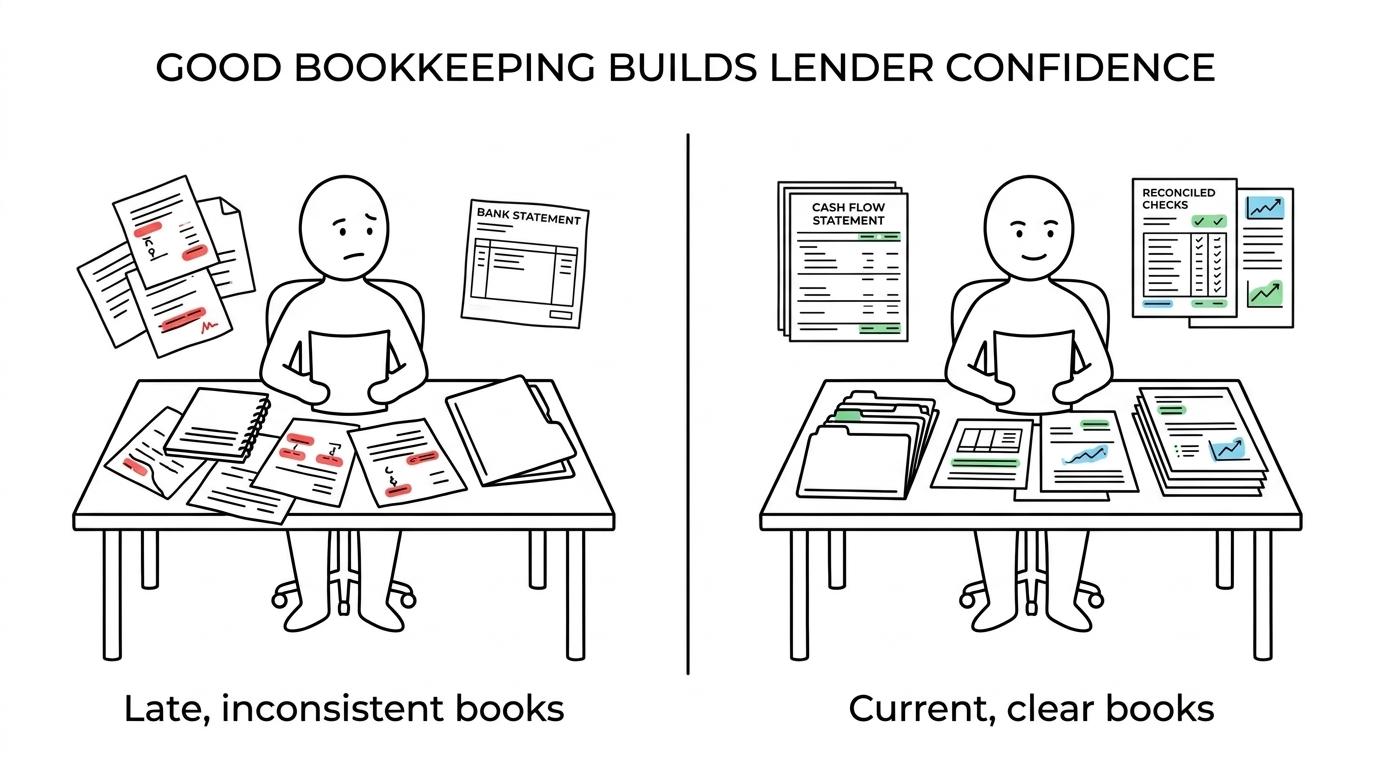
A good finance application does not only present numbers. It presents numbers that tie together. The profit figure should make sense alongside VAT returns, bank activity, payroll, trade debtors, trade creditors, and tax filings. If those parts do not match, questions will follow.
| Bookkeeping output | What it shows | Why a lender cares |
|---|---|---|
| Sales ledger | Revenue patterns, debtor balances, payment timing | Tests income quality and collection discipline |
| Purchase ledger | Supplier costs, overdue bills, recurring expenses | Shows cost control and hidden pressure points |
| Bank reconciliations | Whether books match actual cash movement | Builds trust in the accuracy of reports |
| VAT records | Tax treatment and filing discipline | Helps assess compliance risk |
| Payroll records | Staffing cost consistency and obligations | Highlights fixed cost commitments |
| Management accounts | Profitability, trends, and monthly performance | Supports a stronger lending case |
| Cash flow forecast | Expected inflows, outflows, and repayment capacity | Helps judge whether repayments look realistic |
Cash flow bookkeeping and repayment capacity
Cash flow is one of the main indicators a lender reviews. A business can report profit and still struggle to meet repayments if customers pay slowly, stock absorbs too much cash, or tax liabilities land at the wrong time.
Current bookkeeping makes cash flow visible early. When receipts and payments are recorded properly, the business can prepare a cash flow forecast with real substance behind it. That matters because a forecast is not persuasive on optimism alone. It is persuasive when historic records support the assumptions.
A lender is likely to ask, directly or indirectly, questions like these:
- Can the business cover repayments during slower months?
- Are debtor days rising?
- Is VAT creating periodic pressure on cash reserves?
- Are margins strong enough to absorb borrowing costs?
Those answers come from records, not guesswork.
Up-to-date bookkeeping reduces red flags in business finance
Outdated records do not simply slow an application down. They can change how risk is perceived.
Government guidance for investment readiness warns that outdated or inconsistent records, missing filings, and undisclosed liabilities can trigger immediate concern. The same logic applies to debt finance. When one figure conflicts with another, a lender may wonder what else is missing.
Even a small inconsistency can have a wider effect. A bank balance that does not reconcile, a director’s loan account that looks unclear, or overdue bookkeeping that leaves VAT or tax estimates uncertain can all weaken confidence. The issue is not only whether the business is viable. The issue is whether the lender can rely on the evidence.
Common bookkeeping red flags include:
- Unreconciled bank accounts: reported cash does not match the bank
- Late posting of transactions: management figures are already out of date
- Missing purchase records: liabilities and true margins may be understated
- Old debtor balances: overdue sales may not convert into cash when expected
- Unclear tax positions: corporation tax or VAT exposure may be larger than shown
- Inconsistent filings: accounts, returns, and internal reports tell different stories
These problems are often fixable. What matters is timing. Fixing them a week before the application is much harder than fixing them as part of regular monthly bookkeeping.
UK bookkeeping rules and record retention for finance readiness
There is also a compliance point that should not be ignored. In the UK, businesses are generally expected to keep accounting records for at least six years. Companies must retain records of money received and spent, assets, debts, stock, and goods bought and sold, along with the supporting information needed for annual accounts and Companies House returns.
Those records serve two purposes at once. They support compliance with HMRC and Companies House requirements, and they give lenders a reliable trail of evidence. If the trail is weak, the finance process becomes slower and more uncertain.
The core records usually include:
- sales invoices and credit notes
- purchase invoices and supplier statements
- bank records
- cash books
- payroll records
- VAT records
- asset registers
- loan agreements and finance schedules
For companies, poor record keeping can carry serious consequences. GOV.UK states that HMRC can fine a company £3,000 for failing to keep accounting records, and directors may face disqualification. That is a compliance risk in its own right, and it is not the kind of signal a lender wants to see around a borrowing request.
Management accounts from bookkeeping data strengthen the finance story
Raw transaction data rarely speaks for itself. Bookkeeping becomes far more useful when it is turned into management accounts.
Management accounts can show monthly profit trends, gross margin movement, overhead pressure, creditor cycles, debtor collection speed, and cash position. They help a lender see whether performance is stable, seasonal, improving, or under strain. They also help the business explain why borrowing is needed and how it will support growth, stock purchases, hiring, working capital, or investment.
This is where current bookkeeping can change the tone of an application. Rather than reacting to lender questions, the business can present a clear financial narrative from the start. That narrative might show rising turnover with temporary working capital pressure, or stable demand with a case for expansion funding. Either way, the numbers are easier to trust when they come from disciplined records.
Numbers carry more weight when they answer the next question before it is asked.
Practical bookkeeping checks before applying for finance
A strong finance application often starts a month or two before the paperwork is submitted, not on the day the form is opened.
That lead time gives the business a chance to review its ledgers, clear old issues, and prepare reports that genuinely reflect current trading. It also allows time to produce forecasts that connect with recent performance rather than broad assumptions.
A sensible pre-application review often covers five areas:
- Bank reconciliations: make sure all business bank and credit card accounts are fully reconciled.
- Sales and debtor review: clear duplicate invoices, write off unrecoverable amounts where appropriate, and review aged debtors.
- Purchase and creditor review: capture missing supplier invoices and confirm that liabilities are complete.
- Tax and compliance check: confirm VAT, payroll, corporation tax, and Companies House filings are up to date.
- Reporting pack: prepare management accounts, a balance sheet, cash flow forecast, and any supporting notes needed for the application.
A business plan may sit alongside these reports, especially where the borrowing is linked to expansion. The strongest plans are anchored in real bookkeeping data. If revenue assumptions, margin expectations, or cost forecasts are out of step with recorded history, the lender is likely to spot it quickly.
Business credit information matters too. While bookkeeping does not control every element of a credit profile, timely record keeping helps reduce the risk of missed obligations, unclear liabilities, or filing issues that can feed concern about financial discipline.
Bookkeeping support can help when finance timelines are tight
Many businesses apply for finance during a period of change. Sales are rising, stock needs to increase, a new site is being considered, or cash is being stretched by growth. Those are exactly the moments when bookkeeping can fall behind.
External support can help bring records up to date, keep VAT and payroll in order, and produce management accounts that are useful both for internal decision making and for finance discussions. Cloud accounting tools can also make the reporting cycle faster, with better visibility over cash, debtors, creditors, and tax positions.
For businesses operating across the UK and UAE, or businesses with more complex compliance needs, it can be especially valuable to work with advisers who can connect bookkeeping, tax, reporting, and finance readiness in a practical way. The aim is simple: clear records, credible numbers, and fewer surprises when a lender starts asking questions.
When the books are current, finance conversations tend to become more focused, more confident, and more productive. That gives the business a better platform not only to apply, but to make a stronger case for the funding it wants.