For a sole trader, “separating business and personal tax” does not mean creating two completely different tax identities. Legally, you and the business are the same person. That is the starting point, and it explains why so many people get confused.
The good news is that clean separation is still very possible. In practice, it comes from disciplined records, sensible expense treatment, and a Self Assessment return that reports business income and business costs properly. Once that structure is in place, tax becomes clearer, decisions improve, and the risk of claiming the wrong deduction falls sharply.
Why sole trader tax separation works differently
A limited company has its own legal identity and its own company tax position. A sole trader does not. There is no separate corporation tax return for the business, because the trade is reported through the individual’s Self Assessment return.
That means business profits flow straight into the owner’s personal tax position. Income tax is calculated on the individual, not on a separate company. So the real tax separation for sole traders is not about creating a legal wall. It is about creating a clear financial boundary.
That boundary usually depends on three things: identifying business income correctly, claiming only allowable business costs, and keeping private spending out of the accounts except where a fair split is needed.
Self Assessment and sole trader taxable profit
Self Assessment is the place where business and personal tax meet. A sole trader includes trading income and allowable business expenses on the return, and the result is the taxable profit from the trade.
That profit then sits alongside any other personal income the individual may have, including salary, dividends, property income, or savings income. So while the business is not taxed separately, the business figures still need to be prepared with care.
A simple way to think about it is this:
| Area | Business treatment | Personal treatment |
|---|---|---|
| Sales income | Included in trading income | Not shown again as separate personal earnings |
| Business-only expenses | Deducted if allowable | Not personal deductions |
| Mixed-use costs | Business share only | Private share left out |
| Personal spending | Not deductible | Paid from post-tax income |
| Final profit | Calculated in business section | Taxed through the individual return |
This is why bookkeeping matters so much for sole traders. If records blur business and private spending together, the Self Assessment return becomes harder to prepare and easier to challenge.
Allowable expenses and the wholly and exclusively rule
The core HMRC rule is that expenses must be incurred wholly and exclusively for the purposes of the trade if they are to be deducted. That phrase is central to sole trader tax.
If an expense is purely for the business, the treatment is usually straightforward. If it is personal, it is not deductible. The difficult area is the middle ground, where a cost has both business and private elements.
Some costs fail the test completely because they are inherently personal. Others can be split, with only the business proportion claimed. That distinction is one of the most useful habits a sole trader can build.
In day-to-day terms, the strongest approach is to classify spending from the start rather than trying to rebuild it months later.
- Business-only purchases
- Mixed-use costs
- Private spending
- Capital items
- VAT-sensitive transactions
A clean chart of categories makes year-end work faster and more accurate. It also gives a stronger basis for answering any later HMRC questions.
How to apportion mixed-use costs for sole traders
Where a cost has both business and private use, HMRC allows a reasonable apportionment of the definite business part. This is often called apportioning expenditure. The principle is simple even if the numbers take a little work.
Working from home is a common example. If part of the home is used for the trade, a proportion of certain household costs may be claimed. The split must be reasonable. HMRC guidance accepts that room use and time use can be relevant in working out the business share.
Vehicle costs also often need a private use adjustment. If a car is used for both work and personal travel, only the business element should be claimed. The same thinking can apply to phone bills, internet costs, and other shared overheads.
Useful methods often include:
- Room basis: divide relevant household costs by the number of rooms used
- Time basis: reduce the claim if the room is not used for business all the time
- Mileage method: use approved flat rates where this is available and suitable
- Usage records: keep logs for vehicles, calls, or internet use
The point is not mathematical perfection. It is reasonableness, consistency, and evidence.
Simplified expenses and flat-rate methods
Some sole traders prefer simplified methods for certain costs rather than calculating actual proportions each time. This can be especially helpful for home working and vehicle use, where small transactions build up across the year.
Flat-rate methods can reduce admin and create a practical routine, though they are not always the most tax-efficient option. A trader with high actual costs may prefer to calculate the real business share instead.
The best method often depends on volume, complexity, and record quality. A person with a simple side business may value speed. Someone with substantial travel or significant home working costs may benefit from a more detailed calculation.
Trading allowance versus actual expenses
The trading allowance is another area where sole traders can make cleaner tax choices. HMRC allows up to £1,000 a year of tax-free trading income for individuals, subject to the rules.
For some people, especially those with modest side income, using the trading allowance can be simpler than claiming actual business expenses. Instead of itemising costs, the taxable profit is reduced by the allowance.
That said, it is not automatically the best option. If actual allowable expenses exceed £1,000, claiming the real costs may produce a better tax result. The choice should be based on figures, not convenience alone.
A practical comparison looks like this:
| Option | Best suited to | Main benefit | Main watchpoint |
|---|---|---|---|
| Trading allowance | Small-scale trading with low costs | Simplicity | May miss a larger deduction |
| Actual expenses | Established trade or higher overheads | More accurate relief | Needs stronger records |
This is one of those decisions that looks minor but can meaningfully affect taxable profit. A quick annual comparison is often enough to show which route makes sense.
Business bank accounts and record keeping for cleaner tax separation
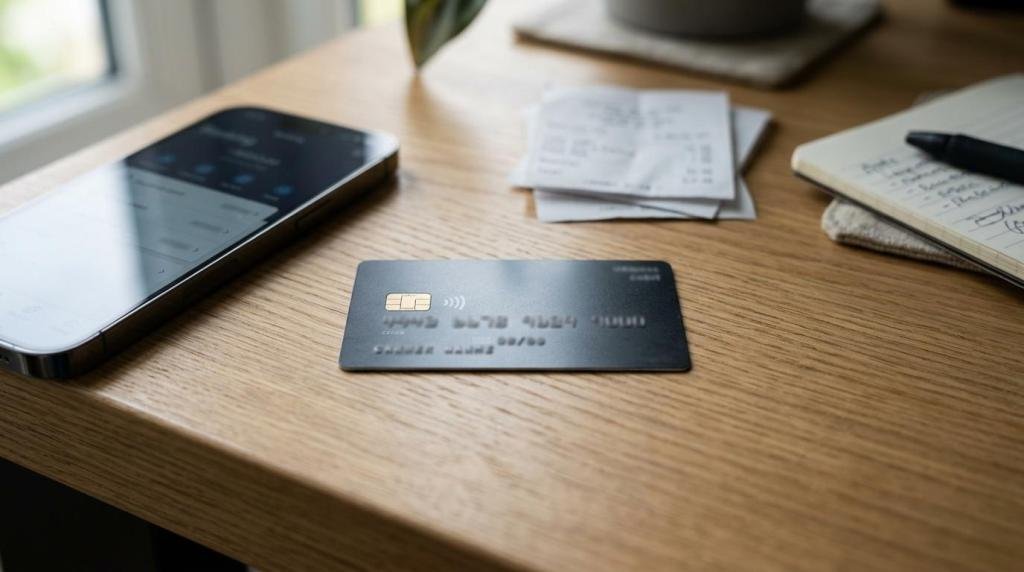
A sole trader is not legally required to create a separate legal entity, yet using a dedicated business bank account is still one of the smartest practical steps available.
It gives you a natural divide between trade activity and personal living costs. That in turn makes bookkeeping easier, cuts down on omitted income, and reduces the number of mixed transactions that need explanation.
A clear record keeping routine usually includes:
- One business account: use it for sales receipts and business payments
- Digital capture: store invoices and receipts as you go
- Monthly review: check for mixed-use costs that need apportionment
- Expense notes: record why a cost was incurred when the purpose may not be obvious
Even where a personal card is used occasionally for a business purchase, that item should still be recorded separately and supported with evidence. The goal is not perfection on day one. It is a system that produces reliable figures by the time the return is prepared.
Cloud accounting tools can help here. They do not replace judgement on tax treatment, but they can make categorisation, receipt storage, and bank reconciliation far more efficient.
Common sole trader tax mistakes that blur personal and business spending
Many sole trader tax problems come from habits, not from complex law. A few repeated mistakes create most of the confusion.
One common error is assuming that anything connected with work is automatically deductible. That is too broad. The real test is whether the cost was incurred wholly and exclusively for the trade, or whether only part of it qualifies.
Another is failing to split mixed-use expenditure. If a mobile phone, vehicle, or room at home is used partly for private life, the private element should be removed. Claiming the full amount may overstate expenses.
Frequent weak spots include:
- Claiming personal food and clothing as business costs
- Missing private use adjustments
- Mixing household and trade spending in one account
- Forgetting small cash expenses but claiming vague estimates later
- Choosing the trading allowance without checking actual expenses first
These are all fixable issues. Good records and a short monthly review usually catch most of them before year-end.
Self Assessment deadlines and year-round tax habits
Tax separation is not just about what appears on the return. It is also about when figures are prepared and checked. Leaving everything until filing season makes errors more likely and planning more difficult.
HMRC provides tools and guidance to help taxpayers check filing and payment deadlines, especially where accounting periods and payment arrangements need attention. For a sole trader, it is wise to review deadlines early and keep them visible.
The strongest routine is usually simple rather than elabourate. Record income weekly, file receipts promptly, review mixed-use items monthly, and compare profit estimates during the year. That approach turns tax from a once-a-year scramble into an organised business process.
A practical routine for sole traders who want cleaner personal tax records
If you want separation without unnecessary complexity, start with structure. Use one account for the trade. Keep evidence for every claim. Mark mixed-use costs clearly. Review whether the trading allowance or actual expenses gives the better result. Then feed accurate figures into Self Assessment.
That is the real discipline behind sole trader tax. Not artificial separation, but accurate distinction.
For many businesses, that one shift changes everything. It creates cleaner accounts, stronger compliance, and more confidence in the numbers being filed.