
If you are responsible for a UK trust or estate, the tax return is not something to leave until the last minute. CBM Accounting Ltd provides trust tax return filing services for trustees, personal representatives, charities and trusts across the UK, helping you deal with HMRC’s SA900 Trust and Estate Tax Return process with clear, practical support.
As a chartered accountancy and tax consultancy firm with a London base, CBM Accounting supports clients who need accurate filing, deadline control and advice that goes beyond simply sending a form. We prepare and submit trust tax returns, including SA900 returns, and we also help where the filing sits alongside charity tax obligations, HMRC compliance or wider accounting and tax matters.
UK trust tax return filing services for trustees and estates
CBM Accounting handles UK trust tax return preparation and submission for clients who need the SA900 filed correctly and on time. That includes support for trusts across the UK, as well as trust and charity tax return work where HMRC compliance needs to be handled carefully.
HMRC requires trust and estate income and gains to be reported after each tax year through the Trust and Estate Tax Return process, and the deadlines matter. Paper SA900 returns are due by 31 October, online filing is due by 31 January, and any tax due must also be paid by 31 January.
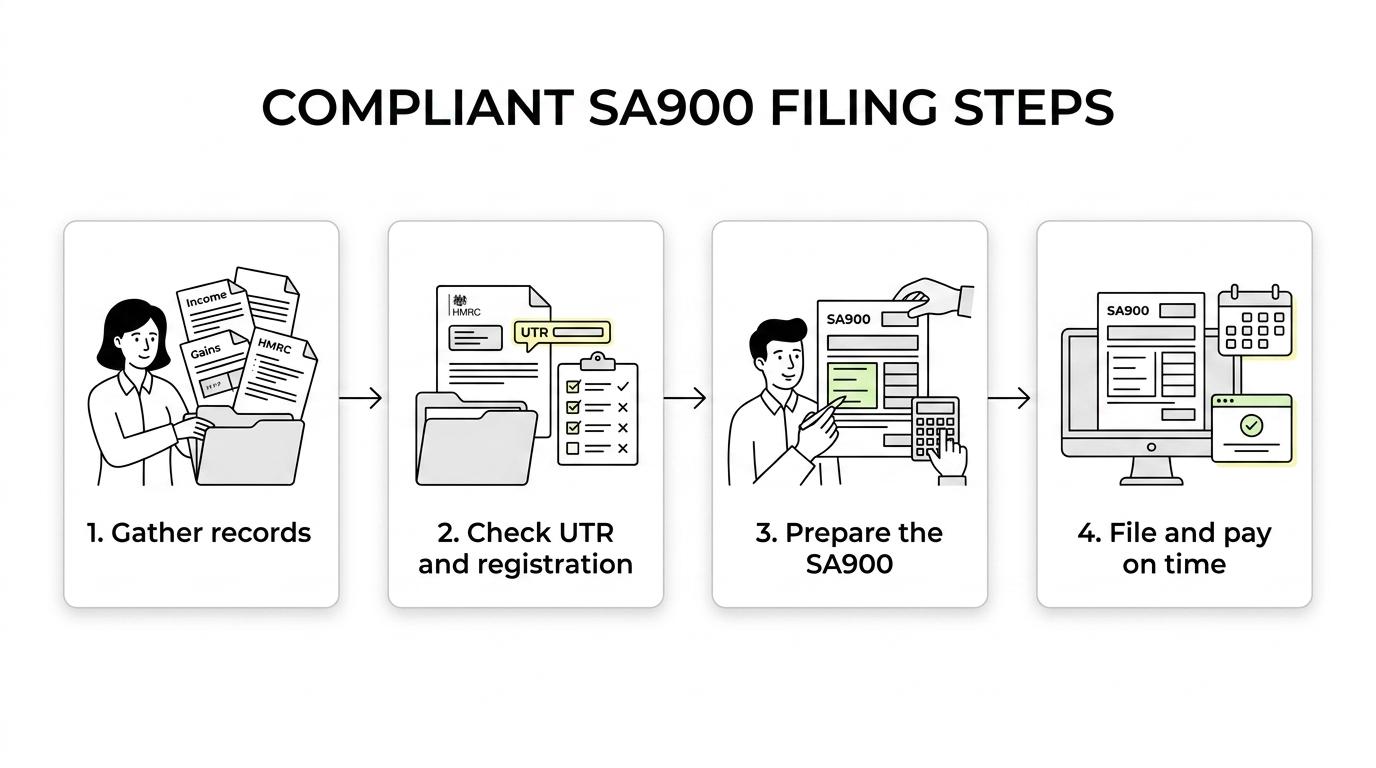
“CBM Accounting helps you manage the SA900 process around HMRC’s 31 October paper deadline and 31 January online deadline.”
For you, that means less uncertainty around what needs filing, when it needs filing, and what information HMRC expects to see. CBM Accounting keeps the focus on accurate submission, clear communication and reducing the risk of missed trust tax deadlines.
SA900 preparation, UTR checks and Trust Registration Service support
CBM Accounting prepares the figures and return details needed for a Trust and Estate Tax Return so you can move from scattered records to a filed SA900 with a clearer view of your obligations. We work with the trust or estate tax position in a way that supports compliance rather than treating the return as a box-ticking exercise.
For estates, HMRC may issue a Unique Taxpayer Reference that is used to file the SA900, and some estates may also need attention to Trust Registration Service requirements. HMRC guidance states that an estate in administration may need to use the Trust Registration Service where personal representatives must complete an SA900 and the total Income Tax and Capital Gains Tax due for the administration period exceeds £10,000.
“Where an estate needs an SA900 and tax due exceeds £10,000, CBM Accounting can help you address the Trust Registration Service point.”
When CBM Accounting supports your trust or estate return, the work can include:
- SA900 return preparation and submission: preparing and filing the Trust and Estate Tax Return based on your records and HMRC requirements.
- UTR and filing status checks: helping you understand whether the trust or estate has the reference details needed for filing.
- Trust and charity tax support: assisting with trust and charity returns, including attention to HMRC and Charity Commission compliance where relevant.
- Related tax advice: advising on connected points such as charitable tax exemptions and Gift Aid where those issues apply.
You also get a practical consultation approach. That matters when you are dealing with trusteeship duties, estate administration or charity-related reporting and need direct answers rather than generic tax language.
“CBM Accounting supports trust and charity tax returns with HMRC and Charity Commission compliance in view.”
If you are unsure whether the issue is the return itself, the registration step, or the tax due behind it, we can help you sort the filing path before the deadline pressure builds.
Who CBM Accounting helps with UK trust and estate returns
CBM Accounting provides trust tax return services for a broad range of UK clients who have formal filing responsibilities. That includes trustees who must report trust income and gains, personal representatives handling estate tax reporting during the administration period, and charities or trusts that need filing support with compliance kept front and centre.
Because CBM Accounting also supports businesses, SMEs, sole traders, landlords and other organisations, we are a useful fit when the trust tax return is only one part of a wider financial picture. If your trust or estate reporting overlaps with business ownership, property income, charity activity or broader tax planning, you can keep those conversations in one place.
CBM Accounting is London-based and works with clients across the United Kingdom, with additional UK and UAE expertise for clients whose affairs are not confined to one simple set of circumstances. That wider tax and advisory background helps when your trust obligations sit alongside international or multi-entity financial matters.
Why CBM Accounting is a strong fit for deadline-driven HMRC trust compliance
CBM Accounting is a good choice when you want more than form submission. Our service is built around accounting, tax, compliance and advisory work, so the trust tax return is handled in the context of your real reporting obligations, not in isolation.
That shows up in practical ways. You get a firm that already works across tax returns, accounting, financial reporting, outsourced finance support and HMRC-focused compliance, which is useful when a trust or estate return connects to records, reporting quality or next steps queries.
CBM Accounting also uses cloud accounting and digital tools where appropriate, helping make document sharing and information handling more manageable. For you, that can mean less back and forth and a clearer route from records to submission.
Professional affiliations with ACCA, CIMA, IFA and ICPA support the standards behind CBM Accounting’s work. Combined with our confidential, tailored consultation approach, that gives you a more dependable basis for dealing with sensitive trust and estate tax matters.
CBM Accounting is often the right fit when:
- You need SA900 filing help: you want a firm to prepare and submit the trust or estate return accurately.
- You need clarity on HMRC requirements: you are unsure about deadlines, UTRs, tax due or registration points.
- You want joined-up support: the trust return sits alongside charity, business, property or wider tax issues that also need attention.
What to prepare for your trust tax return submission
To keep your trust tax return moving, CBM Accounting will usually need the core records that support the filing position. The exact paperwork depends on the trust or estate, but it commonly helps to have:
- Reference details: any Unique Taxpayer Reference or HMRC correspondence already issued.
- Income records: details of income received by the trust or estate during the relevant tax year or administration period.
- Gains information: records of disposals or transactions that may create chargeable gains.
- Previous filing history: earlier returns, tax calculations or HMRC notices if the trust or estate has filed before.
- Charity-related records where relevant: documents linked to charitable tax exemptions or Gift Aid where those points apply.
CBM Accounting reviews what is relevant to your filing rather than asking for unnecessary paperwork. That helps you focus on the records that actually support the SA900 and any related trust or estate reporting obligations.
Speak to CBM Accounting about your UK trust tax return
If you need a UK trust tax return prepared, submitted and handled with proper attention to HMRC deadlines, CBM Accounting can help. We support trustees, personal representatives, charities and trusts across the UK with SA900 filing and the related compliance questions that often come with it.
The best time to start is before the filing deadline becomes urgent, especially if there are registration, UTR or estate administration questions to resolve first. Contact CBM Accounting to discuss your trust tax return and get the SA900 process moving with clearer advice and practical support.